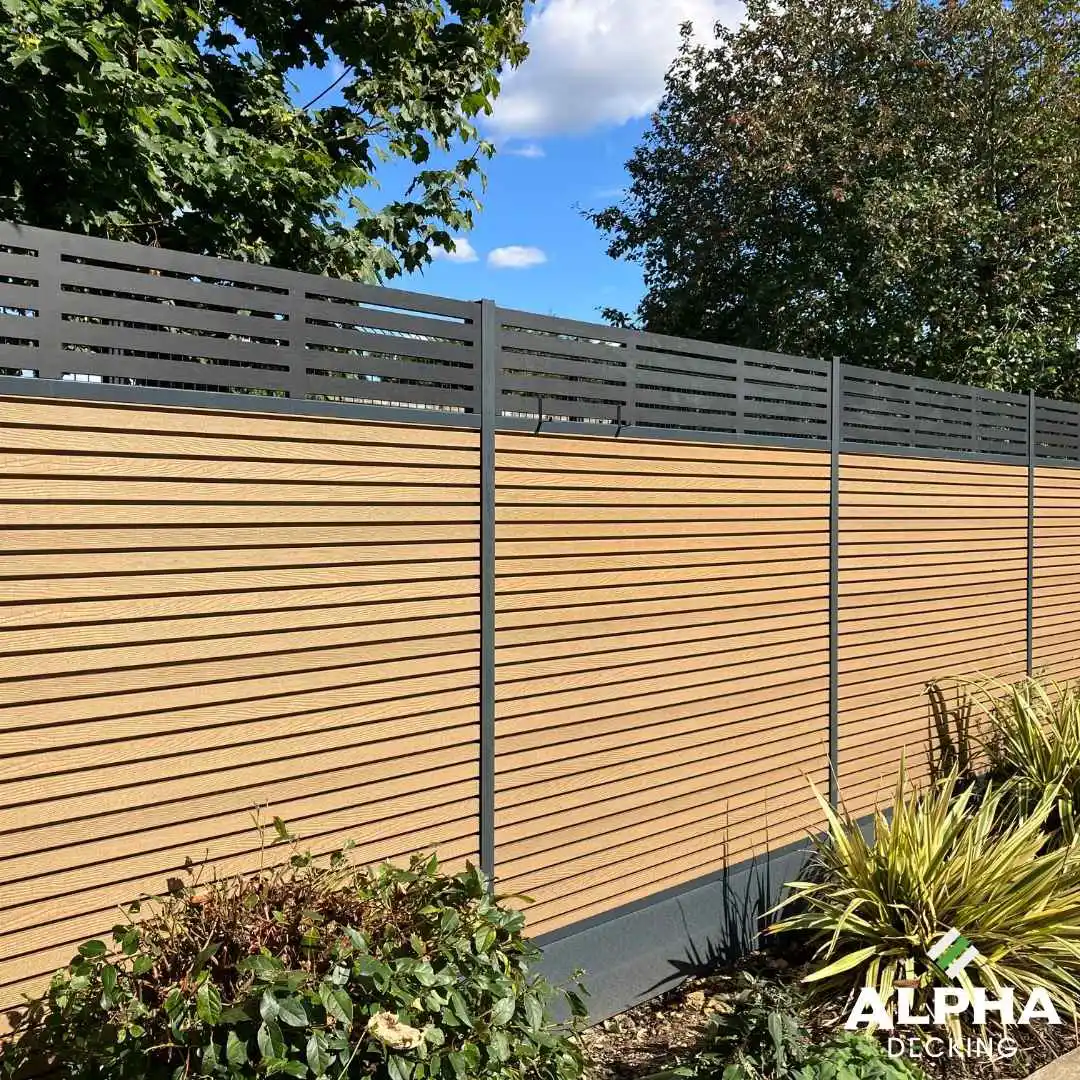
Choosing new garden fencing is no longer just about marking a boundary. Homeowners are increasingly looking for fencing that delivers privacy, durability, modern styling, and long-term value without the constant maintenance associated with traditional timber panels. As a result, composite fencing has become one of the fastest-growing alternatives to wood fencing across the UK.
For homeowners researching different types of fencing, Alpha Decking’s Willow and Aspen composite fencing both offer durable, low-maintenance solutions designed for modern outdoor living. While both ranges share the same core composite benefits, each has its own distinctive style and finish, making them suitable for different types of gardens and landscaping projects.
Let’s explore the differences between Willow and Aspen while getting a better understanding of the wider discussion around composite vs wood fence systems, long-term durability, and how to choose the right fencing for their outdoor space.
Traditional timber fencing has been used in UK gardens for decades, but many homeowners are now looking for alternatives that require less upkeep and provide longer-lasting performance.
Composite fencing is manufactured using a blend of recycled wood fibres and recycled plastic, creating a product that combines the visual appeal of timber with enhanced durability and weather resistance. Unlike traditional timber fencing, composite panels are designed to resist many of the common issues caused by prolonged exposure to the British weather.
This is one of the biggest reasons why the debate around timber vs composite fencing has become increasingly important for homeowners planning garden renovations or boundary upgrades.
When comparing a composite vs a wood fence, maintenance is often one of the first factors homeowners consider.
Timber fencing can look attractive when first installed, but over time, it may require regular staining, painting, or treatment to protect it from moisture and weather damage. In many cases, timber fencing can also warp, crack, splinter, or rot as it ages.
Composite fencing is designed to minimise these issues. Because the boards are manufactured using composite materials rather than natural timber alone, they require significantly less ongoing maintenance. Homeowners do not need to repaint or stain composite panels every year to maintain their appearance.
For many people, the appeal of composite fencing comes from its ability to provide a clean, modern appearance with far less maintenance over the long term.
Alpha Decking’s composite fencing systems are designed to combine durability, aesthetics, and ease of installation.
The fencing ranges are manufactured for year-round outdoor use and are suitable for all seasons, helping homeowners create stylish and long-lasting garden boundaries without the ongoing upkeep associated with timber fencing.
Key benefits of Alpha Decking composite fencing include:
For homeowners researching modern types of fencing, these practical advantages make composite fencing an increasingly popular long-term investment.
While both the Willow and Aspen ranges are designed to provide durable composite fencing solutions, the main difference between them comes down to appearance and overall garden style.
The right choice will often depend on whether you prefer a modern contemporary look or a more natural timber-inspired finish.
The Aspen range is designed with a smooth, clean finish that works particularly well in modern garden spaces.
Its sleek appearance makes it a strong choice for homeowners creating:
The smooth finish creates a more refined and uniform appearance, helping Aspen fencing complement modern homes and contemporary landscaping projects.
Aspen composite fencing is available in several colour options, including Anthracite, Grey, Teak, Oak, and Charcoal, allowing homeowners to match the fencing to their wider garden design and exterior style.
The tongue and groove system also helps create a seamless finish with improved privacy and structural consistency throughout the fence line.
The Willow range offers a more textured appearance designed to replicate a traditional timber aesthetic more closely.
While it still delivers the same low-maintenance benefits associated with composite materials, the overall finish feels softer and more natural compared to the sleek appearance of Aspen.
This makes Willow particularly suitable for:
For homeowners who like the look of timber fencing but want to avoid the maintenance demands of real wood, Willow can provide a strong middle ground between traditional style and modern performance.
There is no universal answer when making a fence comparison between Willow and Aspen because both ranges are designed for slightly different visual outcomes.
Aspen is generally better suited to homeowners looking for sharp lines, modern styling, and contemporary landscaping integration. Its cleaner finish works especially well in newly landscaped gardens and modern outdoor living spaces.
Willow, on the other hand, appeals more to homeowners who want fencing that blends naturally into softer landscaping schemes while still benefiting from the durability of composite materials.
In practical terms, both ranges offer similar advantages when compared with traditional timber fencing. Both are designed to resist weather damage, require minimal maintenance, and provide long-lasting garden privacy.
The final decision often comes down to the overall style of the property and the type of outdoor environment the homeowner wants to create.
The shift from timber to composite fencing is largely being driven by long-term maintenance concerns.
With traditional wood fencing, homeowners often face recurring costs related to:
Over time, these maintenance demands can become expensive and time-consuming.
Composite fencing reduces many of these ongoing issues while maintaining a high-end appearance throughout the year. This is one of the biggest reasons why the discussion around timber vs composite fencing increasingly favours composite solutions for modern gardens.
Another major advantage of Alpha Decking composite fencing systems is their installation flexibility.
Both Willow and Aspen fencing can typically be installed using:
This flexibility makes it easier for homeowners to upgrade older fencing systems without completely rebuilding existing structures.
The fencing systems are also designed for relatively straightforward installation, making them suitable for professional landscapers and experienced DIY installers alike.
When exploring different types of fencing, homeowners should consider more than just appearance.
Factors such as maintenance expectations, garden style, privacy requirements, weather exposure, and long-term durability all play an important role in selecting the right fencing solution.
For homeowners prioritising low maintenance, modern styling, and long-term performance, composite fencing continues to stand out as one of the most practical alternatives to traditional timber fencing.
Both Willow and Aspen offer durable and stylish solutions, but choosing between them ultimately comes down to the aesthetic direction of your outdoor space.
Both Willow and Aspen are designed to provide homeowners with durable, stylish, and low-maintenance fencing solutions that perform well in the UK climate.
If your goal is to create a sleek and contemporary outdoor space, Aspen’s smooth modern finish may be the ideal option. If you prefer a softer and more traditional timber-inspired appearance, Willow may better complement your garden design.
Whichever range you choose, Alpha Decking’s composite fencing systems offer a long-lasting alternative to traditional timber fencing with less maintenance, strong weather resistance, and flexible installation options.
For homeowners comparing composite vs wood fence systems and researching modern types of fencing, composite fencing continues to provide one of the best combinations of durability, appearance, and long-term value for modern gardens.


.svg)
